





Anni Albers: A Life by Nicholas Fox Weber, published by Yale University Press.
review by BETH WILLIAMSON
Nicholas Fox Weber’s biography of Anni Albers (1899-1994) is not what you might expect. Often, there can be a sense of authorial distance in such biographies but not here. Instead, Weber has written an intimate text that draws on more than two decades of conversation with his subject. The pair were introduced by a mutual friend in 1971. At this point, Weber explains, he didn’t even realise that the better-known Josef Albers had a wife. Seeing her work was a revelation for him: “As fine art in the medium of different thread – linen, cellophane, hemp – they defied the notion of textile material being used for a functional purpose and were a form of pure abstraction.” It was this discovery, it seems, that drove their conversations over the subsequent years until Anni Albers’ death.
It is clear that Weber enjoyed their conversations and grew closer to the couple over the years. He marvelled at Anni’s devotion to Josef, at the distinct imbalance in their relationship such that Anni’s work was always of secondary importance. She rejoiced in all that Josef cared about and enjoyed her role in supporting him in every way possible. When Josef died in 1976, Anni insisted that Weber’s work on the book should stop. Still, he retained his notes which, he says, “reveal her in her own voice” and they certainly do that.
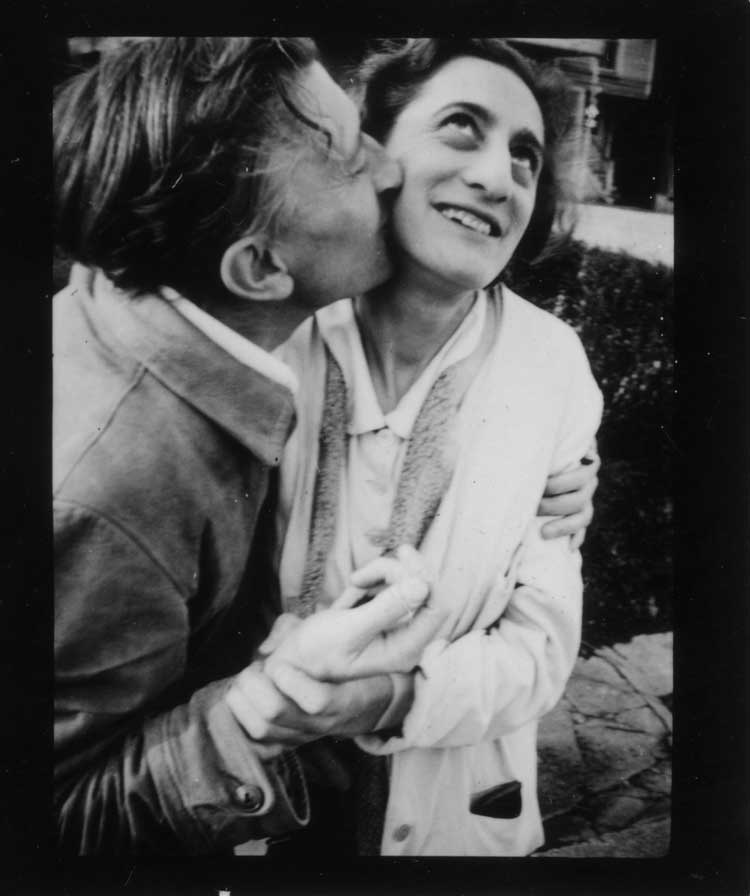
p. 71: Josef and Anni Albers, Asheville, North Carolina, ca. 1935. Courtesy the Josef & Anni Albers Foundation.
Following a privileged childhood in Berlin, Anni studied painting (1916-19) before joining the Bauhaus in Weimar, founded by Walter Gropius in 1919. In 1925 she married Josef Albers, a fellow Bauhaus figure, and they moved with the school to Dessau in 1925. The book includes a reproduction of a photograph of Anni taken by Lucia Moholy in 1927 in which Anni mocks her appearance as akin to “Whistler’s mother”. It is a small insight into her humour. On a more serious note, Paul Klee’s ideas were a profound influence on her at this time when she also developed a close friendship with the weaver Otti Berger. The Dessau Bauhaus dissolved in 1932 moving briefly to Berlin, the Alberses with it, before closing in 1933. The Alberses moved that year to the US to teach at Black Mountain College in North Carolina, where they continued teaching until 1949. It was here that Anni encountered John Cage, Buckminster Fuller and others. It was here, also, that she developed her ideas about tactile sensibility, published much later.
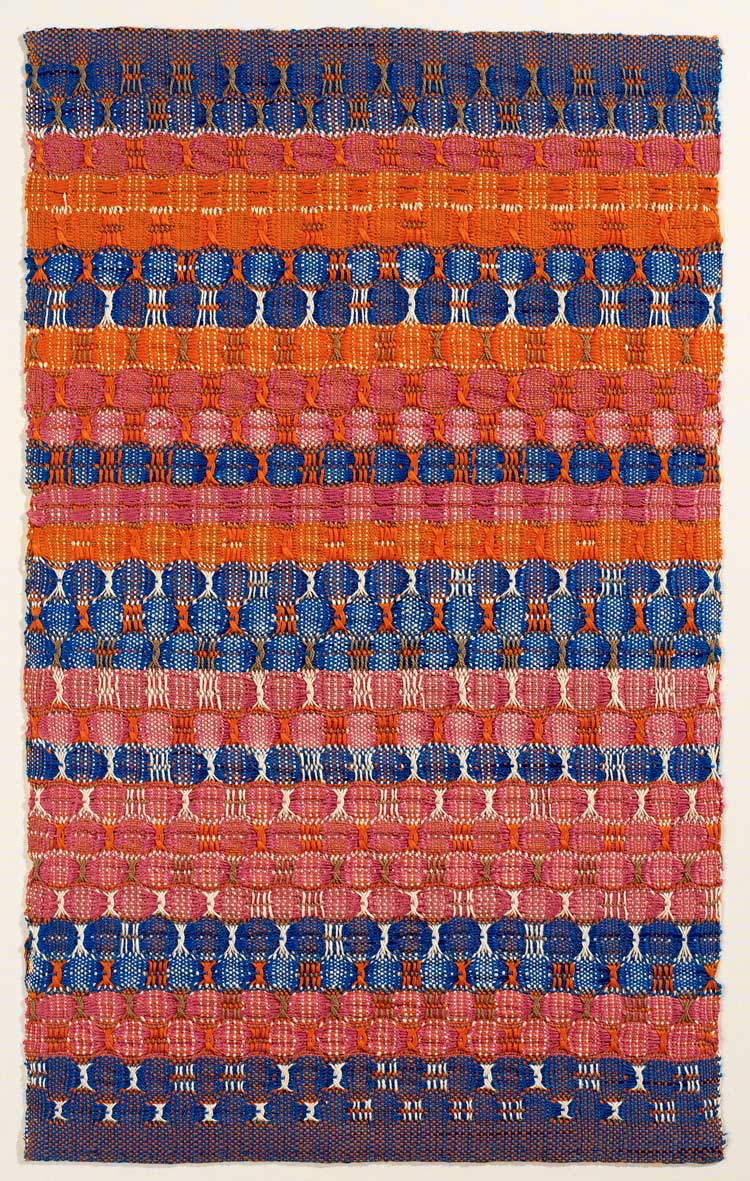
Plate 33: Anni Albers, Red and Blue Layers, 1954. Cotton, 24 1/4 x 14 3/4 in (61.6 x 37.8 cm). © Josef & Anni Albers Foundation / ARS, New York.
In 1949, the year they left Black Mountain, Anni’s work became the subject of an exhibition at the Museum of Modern Art in New York, the first solo presentation of a textile artist in the museum. Josef became director of the department of design at Yale School of Art and the couple moved nearby. In a rare joint exhibition in 1953, at Wadsworth Atheneum in Hartford, Connecticut, Anni’s work attracted critical praise. There are some beautifully intimate moments in this book, such as one when Weber described Anni sewing new collars on to Josef’s shirts while he was away teaching in Ulm, Germany. From the late 50s, Anni had become the go-to designer for drapery in newly built synagogues, including the Temple Emanu-El completed in 1957 in Dallas. Soon, she was experimenting with printmaking and in 1964 received a Tamarind Fellowship.
From the moment Weber met the couple in 1971, he and Anni developed a rapport and he was happy to help the couple where he could. The austerity of their lives belied their pleasure in that lifestyle. Anni was interested in the richness of the ordinary, something that she strived for as much in her weaving as in the sort of furniture with which she lived. She had respected Josef since they met as students at the Bauhaus, yet she was not dominated by him. When Josef died, Weber took on a more significant role in her life. Not least, he facilitated her engagement with his family printing company, Fox Press, and her investigation of photo-offset printing. Anni enjoyed the economy of the processes involved and the relationships with printing technicians such as “the miraculous Gary”. I adored the descriptions of the understated elegance of her clothing when she came to supervise presswork of her prints and how at home she seemed to feel in the manufacturing environment. As Weber explains: “She was quite simply an honest worker trying to get her job done to the highest standards of quality.”
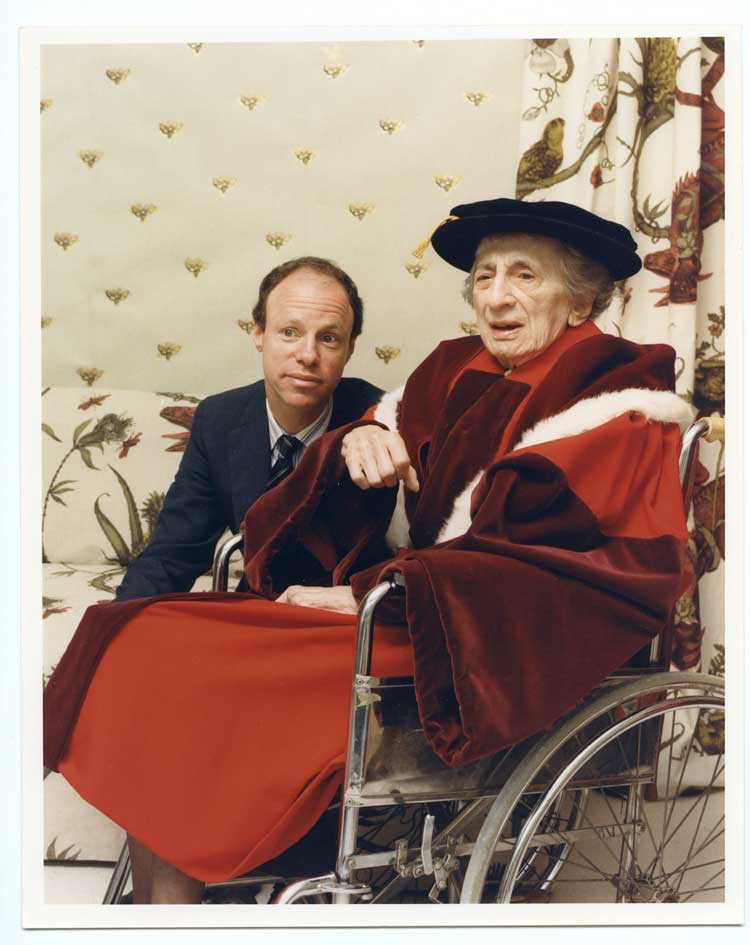
Plate 64: Nicholas Fox Weber and Anni Albers at the Royal College of Art graduation ceremony, London, June 29, 1990. Courtesy the Josef & Anni Albers Foundation.
In the October after Josef’s death, Anni, physically weakened, was diagnosed with advanced lymphoma. In typical fashion, she got on with chemotherapy without comment and, despite her condition, lived for another 18 years. In 1977, the Brooklyn Museum showed an exhibition of her prints and drawings and billed her as a former weaver which, by then, she was, although she continued to design textiles. She was enjoying a degree of acclaim for her own work. Her memories of Josef depreciated into bitterness, and she became somewhat obsessed with the actor Maximilian Schell. In remission from her lymphoma, she was drawing and printing again, although she still insisted that the legacy of Josef’s work was her priority – the Josef Albers Foundation (as it was originally called) and the Josef Albers Museum, the latter opening in 1983. At this time, Anni and the foundation were systematically gifting Josef’s work to museums.
Anni died on 9 May 1994, the date of her and Josef’s wedding anniversary. In a sensitive and personal account of that sad event, Weber reveals just how special their relationship was. His devotion ever since to the Josef and Anni Albers Foundation means that Anni’s legacy keeps growing and this wonderful book serves to strengthen that legacy yet further.
• Anni Albers: A Life by Nicholas Fox Weber is published by Yale University Press, price £25.
Click on the pictures below to enlarge


Copyright © 1893–2026 Studio International Foundation.
The title Studio International is the property of the Studio International Foundation and, together with the content, are bound by copyright. All rights reserved.
 |
 |
 |
|---|
-300.jpg)

-300.jpg)

 Leonor Antunes: ‘I’m interested in ancient ways of doing things’
 Anni Albers: Touching Vision
 Lygia Pape: A Multitude of Forms
 Colour is
 Tuneu: Hexacordo