




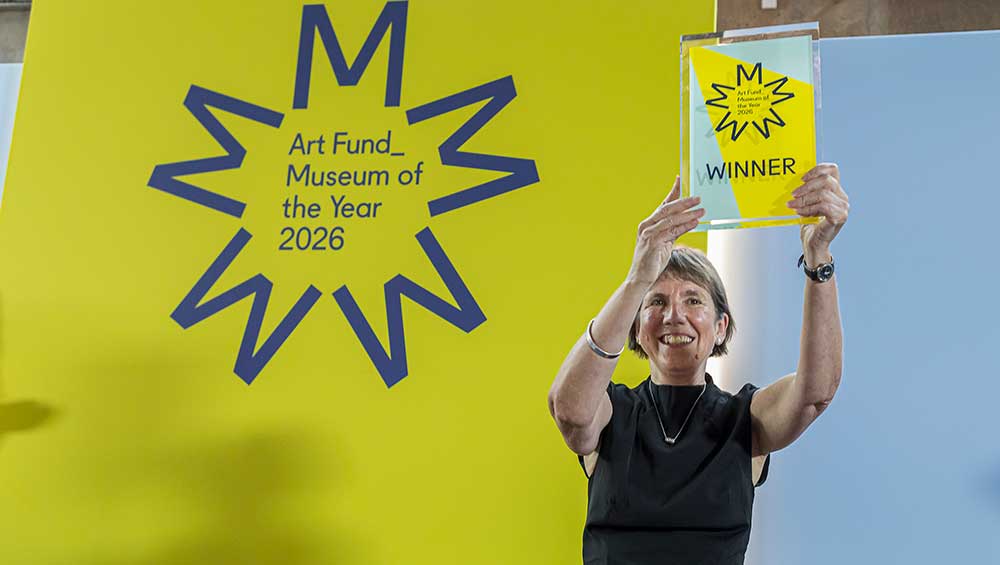
CEO Victoria Pomery, The Box, Art Fund Museum of the Year 2026. Photo: Hydar Dewachi.
by NICOLA HOMER
The Box in Plymouth, which contains more than 2m objects, artworks, specimens and archives, has won the Art Fund Museum of the Year 2026 award with a prize of £120,000. For more than 120 years, the Art Fund has advocated for art and culture and the charity has championed museums with the annual prize since 2013. The award’s previous incarnation was the Prize for Museums and Galleries, supported by the Art Fund and administered by the Museum Prize Trust between 2008 and 2012.
The Box opened in autumn 2020, amid the uncertainty of the Covid pandemic. Containing a museum, gallery and archive, it is an amalgamation of a quartet of existing organisations: the Plymouth Museum and Art Gallery, the South West Film and Television Archive, the Plymouth and West Devon Record Office, and the South West Image Bank. It includes St Luke’s, a former church that now contains a space for temporary exhibitions. A public realm has been created outside The Box. Since its opening, the civic museum has attracted more than 1.3 million visitors. It has published a report exploring its social and economic impact, which is accessible on its website.
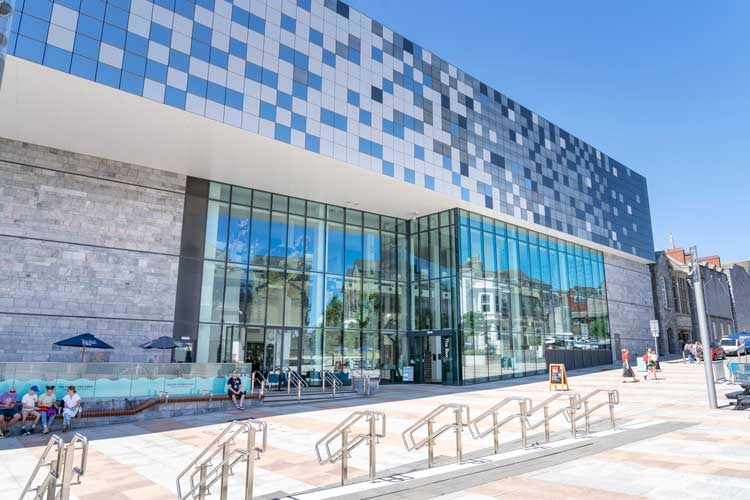
The Box, Plymouth, Museum of the Year, 2026. Photo: Summer 2022 by One Plymouth.
Capital investment of £48m has enabled the organisations to undergo a transformation while English councils have experienced funding cuts. The Box’s chief executive, Victoria Pomery, said: “Most of that funding came from Plymouth city council and they should be absolutely commended for their ambition in terms of really wanting to build a new organisation at a time when many local authorities were not keen on supporting the arts and culture. And so, after five years, we decided to look at our economic and social impact, and we have really thought a lot about our role as a civic museum, and how can we make ourselves more relevant.”
The judges praised The Box for its ambitious and welcoming approach. The museum was one of five finalists, the others being the Fitzwilliam Museum in Cambridge, the National Gallery, Norwich Castle Museum & Art Gallery and V&A East Storehouse. Jenny Waldman, the Art Fund director and chair of the judges, said: “The Box is a revelation in so many ways – a true jewel in the crown of the south-west. In just five years, it has transformed how Plymouth’s remarkable collections are shared and experienced, creating a welcoming space for visitors and reaching beyond its walls into public spaces and almost every school in the city. Its social and economic impact demonstrates what long-term investment in culture can achieve – and is recognised and championed by Plymouth city council.
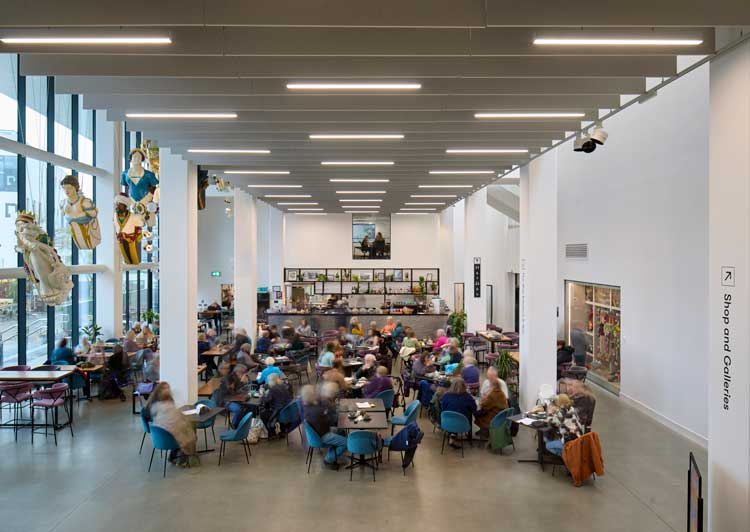
The Box, Plymouth, Museum of the Year, 2026. Photo: © David Levene / Art Fund 2026.
Studio International spoke by telephone to Pomery, about The Box’s collection, community engagement, environmental initiatives and impact. The following is an edited version of that conversation.
Nicola Homer: The museum holds extraordinary collections, including archaeological finds from bronze age Dartmoor and objects from Ancient Egypt, Asia, Africa and Oceania. Can you tell me about the highlights of the museum’s collection?
Victoria Pomery: There are a lot of highlights … there are things that audiences love to see on a very regular basis, but also, like many museum collections, only a small percentage of the collection is on display at any one time. What I and colleagues are really keen to do is ensure that more of the collection is seen by more people, and that sometimes means looking at items that we don’t know very much about for whatever reason. They may have been gifted to the city, or they may have been acquired, but the documentation isn’t as good as it might be about how those acquisitions were made and might not be very good about the actual objects.
We have done a lot of working with artists, where we invite them to work on an exhibition at The Box, where they also get to look behind the scenes, to look at the collections, and to understand a bit more about what is in the collections, and that has been really helpful to us as an organisation, because those artists come in with a slightly different approach, which might be around decolonial narratives. It might be just a curious request about: “What is that over there on the shelf?” And what we’re committed to doing is making sure that more of our collection is accessible to more people and that really does mean curators really understanding the diversity and the scope of what we have and hold here.
NH: What are the best bits of the current exhibitions on show at the museum this year?
VP: We have opened A Life in Colour, an exhibition of paintings by Gillian Ayres. It’s a survey of her practice – the earliest work was made when she was 16 – through to her work from the early 00s. We also have an exhibition called Echoes of Us, which is a collaboration with the Government Art Collection. We let young people from Plymouth curate an exhibition and bring works normally shown in government buildings, in embassies around the globe, to Plymouth. We also have an archive show, which brings out archival material, paintings, papers and reports about Arts University Plymouth. There has been a Plymouth School of Art, a Plymouth College, in the city for 170 years, and this year marks its 170th anniversary, so we are encouraging creativity and creative thinking in the city.
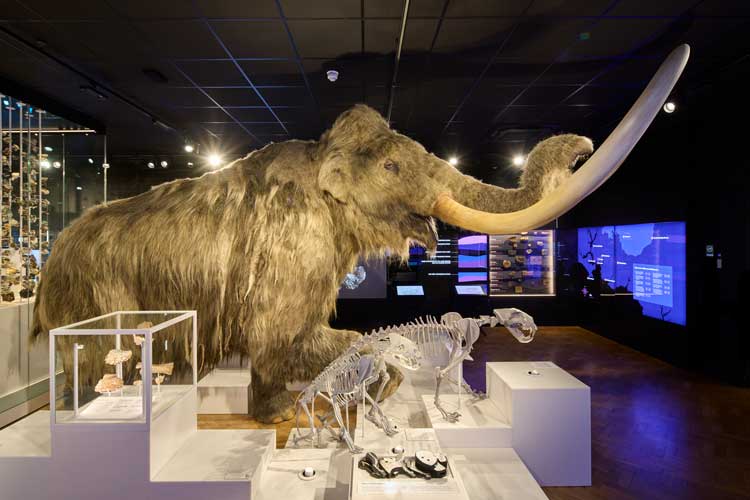
The Box, Plymouth, Museum of the Year, 2026. Photo: © David Levene / Art Fund 2026.
We have a display linked to the natural history collections, which is focused on Mildred the mammoth, a huge replica of a mammoth that would have been roaming through Devon millennia ago. We also have a display drawn from permanent collections that looks at the port of Plymouth, from early times right through to when the navy first moved into Plymouth, when there was a lot of trading, when a lot of people left to go around the globe from Plymouth, the explorers, the Drakes and the Hawkins.
There is a lot about the history of Plymouth in our permanent galleries to give a sense that Plymouth started out as a really small place and has expanded – it has an amazing waterfront. We have tried to tell the story of Plymouth, and it’s not just one story. There are many stories to be told, because history isn’t just a straight line, it’s much more nuanced and complex, as we know, than this happened, this happened, this happened.
NH: That is a very good point. The Box holds film and photography from the city’s media collections in analogue and digital formats, ranging from the 1890s to the present day. How do the photographs in the museum’s collection tell the story of the city’s transformation?
VP: In the autumn, we are making an exhibition called The Way We Live, which looks at a film of the same name by the film-maker Jill Craigie, who made this incredible film after the destruction of the city in the second world war, thinking about how people should live in the future. This year marks the 80th anniversary of that film and, given that there is a huge desire in the city centre to build 10,000 new homes, we are looking at a show that is all about home and housing, and some of the photographs we have of Plymouth immediately after the war, when the new estates were being built on the edges of the city centre, on the outskirts of the city. We will be using some of that material.
We try to bring photography and film into different exhibitions that we host. We also commission artists to work on moving image films using the film archive. Jordan Baseman, a contemporary artist, has made a film looking at issues around art and emotion, and they are based on excerpts from the film archive, some arm-wrestling championships happening in the West Country. Artists pick up on things that maybe we wouldn’t pick up on because they are curious and they are creative.
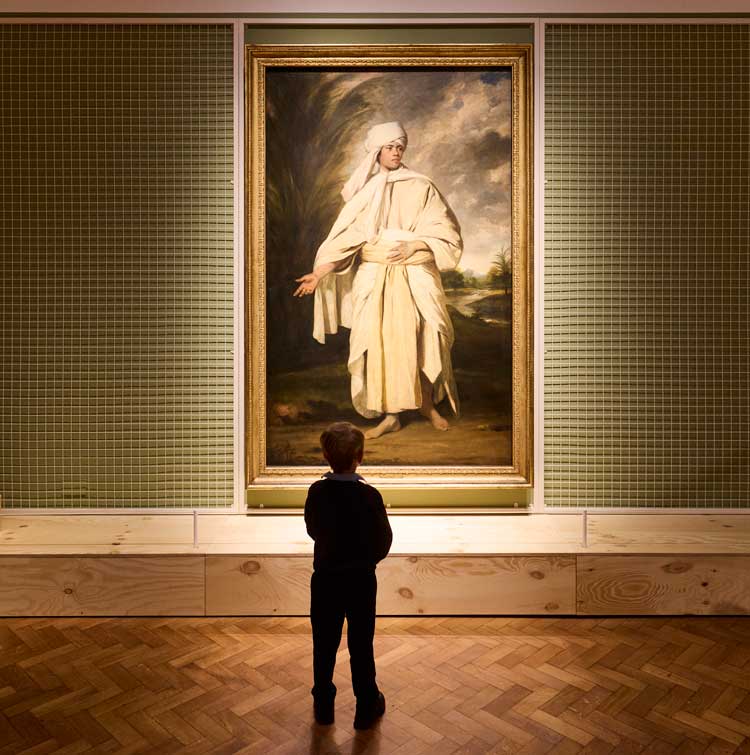
The Box, Plymouth, Museum of the Year, 2026. Photo: © David Levene / Art Fund 2026.
NH: The Box has been praised for its impactful community work, such as the wellbeing benefits that it has delivered for the local community. One project focuses on the Windrush generation, people who migrated from the Caribbean during the mid-20th century. What role does the museum play in the life of the local community?
VP: Increasingly, we are playing a bigger role in the life of the local community, I think in terms of thinking about our work with Culture Club, a community group, and the Windrush generation. As an institution, we have been massively helped by communities having knowledge that we don’t have. When, three years ago Culture Club approached us about doing something around Windrush, we said we would be delighted to support them. When they started to research our archive, we found we had three black-and-white images of Windrush people coming into Plymouth and some passenger lists, but we didn’t have as much information as we should have. Members of the community have been able to find information about the thousands of people who came into Plymouth from the Caribbean. We have been working with them. They have been able to find people whose heritage is from the Caribbean, and we have been able to archive some incredible stories that have come to light in the last two to three years.
NH: I can appreciate that The Box is addressing climate change and environmental responsibility. On the website, The Box articulates a mission “to redefine the collections-based institution for the 21st century, expanding its horizons from local to global, placing collections, artists and audiences at its core”. How do you plan to expand the museum’s horizons in today’s digital society on a global scale?
VP: We have had some international partnerships, and they really help. We were commended as European Museum of the Year in 2022. But I think it’s also about how you partner not only with local communities but national and international communities, so all of that partnership working feels really important … In terms of the environment, we know that quite often museums aren’t the most environmentally sustainable institutions, just because of the air conditioning and the systems we have in place to look after and preserve the collection for the future generation.
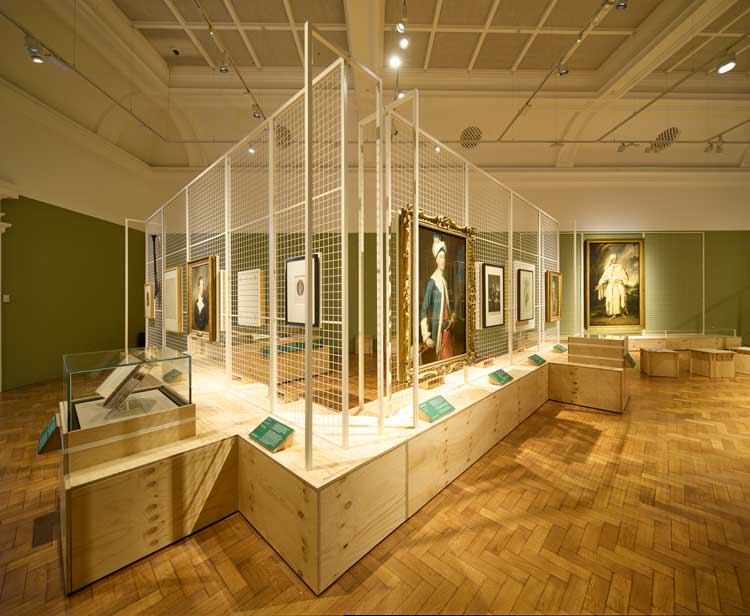
The Box, Plymouth, Museum of the Year, 2026. Photo: © David Levene / Art Fund 2026.
But I think it’s also how we can talk to audiences and get them to think about what is happening to our world. We had Planet Ocean, a big exhibition/display using items from the collection, about two years ago, and that ran into our time of reflecting back to the Art Fund. But that Planet Ocean show was really to look at how Plymouth has been a specialist centre for marine biology and understanding, and how artists might help audiences to think about climate change and some of the creatures and plants that are now no longer with us, and how we might think about our oceans and how we support them. I think cultural venues become very important places for nature and for telling those stories about the natural world.
NH: I would like to ask you about the funding system for museums in the UK, as I understand that over the last two decades, the British government has reduced state funding for culture and encouraged museums to become more self-reliant. The Box has generated almost £244m for the regional economy and established partnerships with the National Gallery, the National Portrait Gallery and the V&A. Can you tell me about how you have achieved that economic impact?
VP: It’s about the number of new visitors coming into the city, people’s overnight accommodation, those sorts of things count as economic impact. In building The Box, we had to employ local constructors, which all help build those businesses. There has been a huge amount of economic impact.
In addition, The Box runs its own catering, so our cafe/restaurant is all run in-house. It’s not contracted out. We have had to think carefully about sustainability and resilience long-term, and we run a successful venue hire. We also have a shop that generates some income. We are trying to think about new ways to diversify our income because, as you say, funding in the UK is not easy. Yes, there is public investment, and we still receive investment from the city council, and we also receive investment from the Arts Council England, as well as the British Film Institute. It’s about having a mixed and a diverse portfolio, rather than all one’s eggs in one basket.
NH: The Box works in partnership with three universities. I gather that it is a challenging time for the arts in the higher education (HE) sector. Indeed, the University of Exeter is planning to make cuts in its creative subjects. How are you finding the current funding climate?
VP: The HE sector is having a really challenging time. The University of Exeter is proposing redundancies. The University of Plymouth has already undertaken a similar kind of restructure and has decided, I think with regret, to cut some of its humanities courses. Across the way, our neighbours, Arts University Plymouth, are totally committed to delivering fine art courses – all their courses are creative subjects. We have worked closely with Arts University Plymouth – we are running a joint MA in museum studies. Equally, we work closely with the University of Plymouth (students have a dedicated space here in The Box). There are lots of different ways we work with HE. We have ongoing dialogue with Plymouth Marjon University about arts and education, in particular, and arts and health. But you are right, it’s a very, very difficult environment for HE, with all these cuts.
I think there is something to be said about Britain failing sometimes to value the arts, culture and creativity. We know that they bring so much more. We know that people engaged in the defence industry, people engaged in health, need to be creative. They need to be creative thinkers. Arts subjects are not there just for people to end up being artists. It’s about a whole approach. It’s about curiosity. It’s about understanding the world better and that’s what culture and creativity bring.
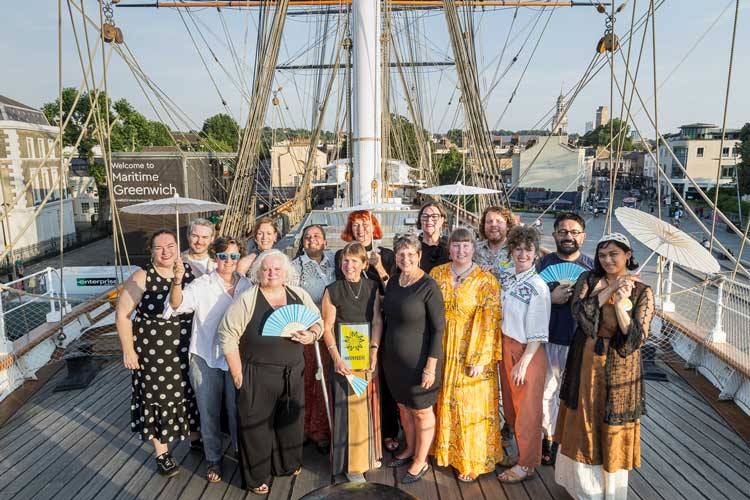
The Box, Plymouth, winners of the Art Fund Museum of the Year 2026. Photo: Hydar Dewachi.
NH: Thank you for highlighting the relevance of studying creative subjects. In light of this challenging time for the arts, I would like to ask you how you plan to spend the prize money. How will it make a difference?
VP: To us £120,000 can make a huge impact. What we haven’t yet agreed is exactly how we are going to spend it. But we are very engaged in co-curation and working with communities and so we anticipate it going towards a project that we will deliver, not necessarily in this financial year, but that will span several financial years, because we want to be ambitious, we want to embed what we do properly. There is no point rushing into doing something, but there are some internal conversations to be had. But we are hugely grateful to Art Fund for the prize because it will make a very significant difference to communities in this city at this time. We are delighted to have this money to be able to think creatively about how it’s best used to achieve maximum impact.
NH: Thank you very much. Would you like to add anything?
VP: Well, I suppose the award has given us as an organisation real confidence. We have had so many lovely messages from peers across the country, from our audiences, from communities. We knew we were up against a very competitive shortlist. All the other organisations are fantastic and are all doing amazing work. So, for me, it was a real surprise to be awarded Museum of the Year. I’m absolutely delighted. The whole team is absolutely delighted. The competition was incredibly tough, but I think, having been awarded Museum of the Year has given us confidence. It’s also confidence about a place.
We may be a long way from London, but we are a big city in this part of the world, and the West Country doesn’t just stop at Bristol, it goes on down through Devon and into Cornwall. I think sometimes the West Country suffers from a lack of understanding about its geography and its makeup. I hope that people will come to visit and see what a city in the West Country is like. We would be delighted to welcome any new visitors to the city. It’s got one of the best waterfronts in the world. It’s located between the Sound, which is the waterfront, and Dartmoor. We look into Cornwall, it’s in a really beautiful location and an important location in thinking about defence of the realm.
• Echoes of Us runs until 20 September; Gillian Ayres: A Life in Colour runs until 4 October; and In the Making: 170 Years of Arts University Plymouth runs until 4 October at The Box, Plymouth.
Click on the pictures below to enlarge

Copyright © 1893–2026 Studio International Foundation.
The title Studio International is the property of the Studio International Foundation and, together with the content, are bound by copyright. All rights reserved.
 |
 |
 |
|---|

-300.jpg)

-300.jpg)
 Rhiannon Hiles, chief executive, Beamish Museum – interview
 Helen Charman – interview: ‘Young V&A is a very optimistic space. It's airy, it’s colourful, it’s playful’
 Samuel Gallacher – interview: ‘We have put the community at the front and centre of what we’ve done at the museum’
 Alexandre da Cunha – interview: ‘All my work is about combining things and making them have a conversation, or sometimes an argument’
 Patrick Heron